
Why Flexi Hoses Need Replacing
They are in every home, they have a limited lifespan, and when they fail the damage is severe. Here is what you need to know.
The braided connectors hidden throughout your property
A flexi hose (also called a flexible connector or braided hose) is a short, braided stainless steel hose that connects your water supply pipes to taps, basins, toilets, dishwashers, and washing machines. They replaced rigid copper connections because they are cheaper and faster to install.
Most homes have between 2 and up to 10 or more of them. They sit under kitchen sinks, bathroom basins, behind toilets, and behind dishwashers and washing machines. Most homeowners have never checked them.
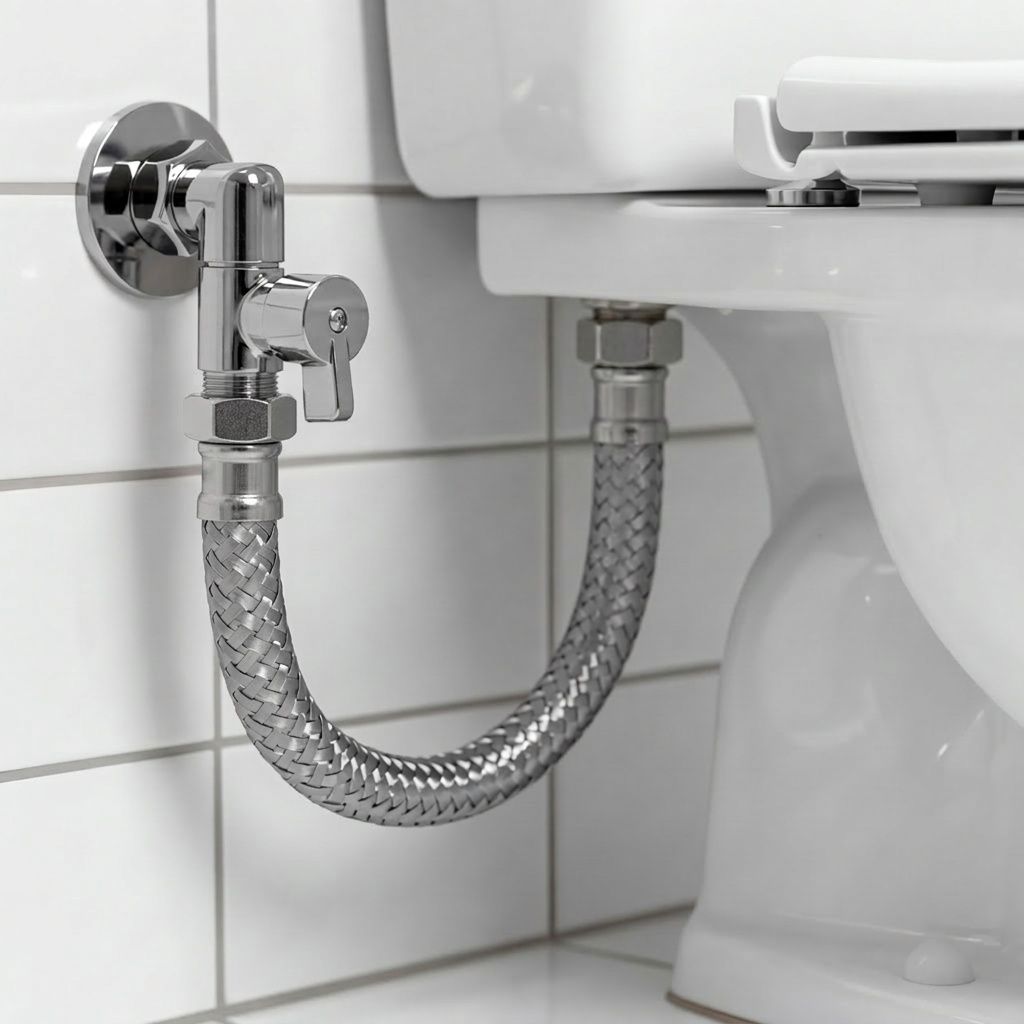
The inner liner degrades over time
The braided stainless steel exterior looks fine. The problem is inside.
The inner rubber or PEX liner breaks down over time regardless of use. Pre-2000 rubber hoses had a 10-year warranty. Newer PEX hoses last up to 15 years. Both should be replaced before warranty expiry.
Australian mains water pressure varies by area. High pressure accelerates wear on the liner and connections. Properties without a pressure limiting valve are at higher risk.
Unlike a dripping tap, flexi hose failure is sudden. The braided exterior can look perfectly intact while the inner liner has already deteriorated. When it goes, water flows at full mains pressure.
What happens when one fails
A burst flexi hose releases water at full mains pressure with no shutoff. The damage escalates by the hour.
Released per hour at full mains pressure
In a single 8-hour workday while you are away
Over 24 hours if not discovered
Average insurance claim from a single burst hose
A simple guide by hose age
Replace immediately
- Pre-2000 rubber hoses (warranty long expired)
- Any hose with visible rust, bulging, or moisture
- Unknown install date and no documentation
- Hoses over 10 years old regardless of type
Plan replacement
- Hoses 5 to 10 years old
- Approaching warranty expiry
- Install date known but no recent inspection
- No signs of wear but age is a concern
Monitor
- Installed within the last 5 years
- WaterMark-certified products used
- Install date documented and tagged
- Next inspection date scheduled
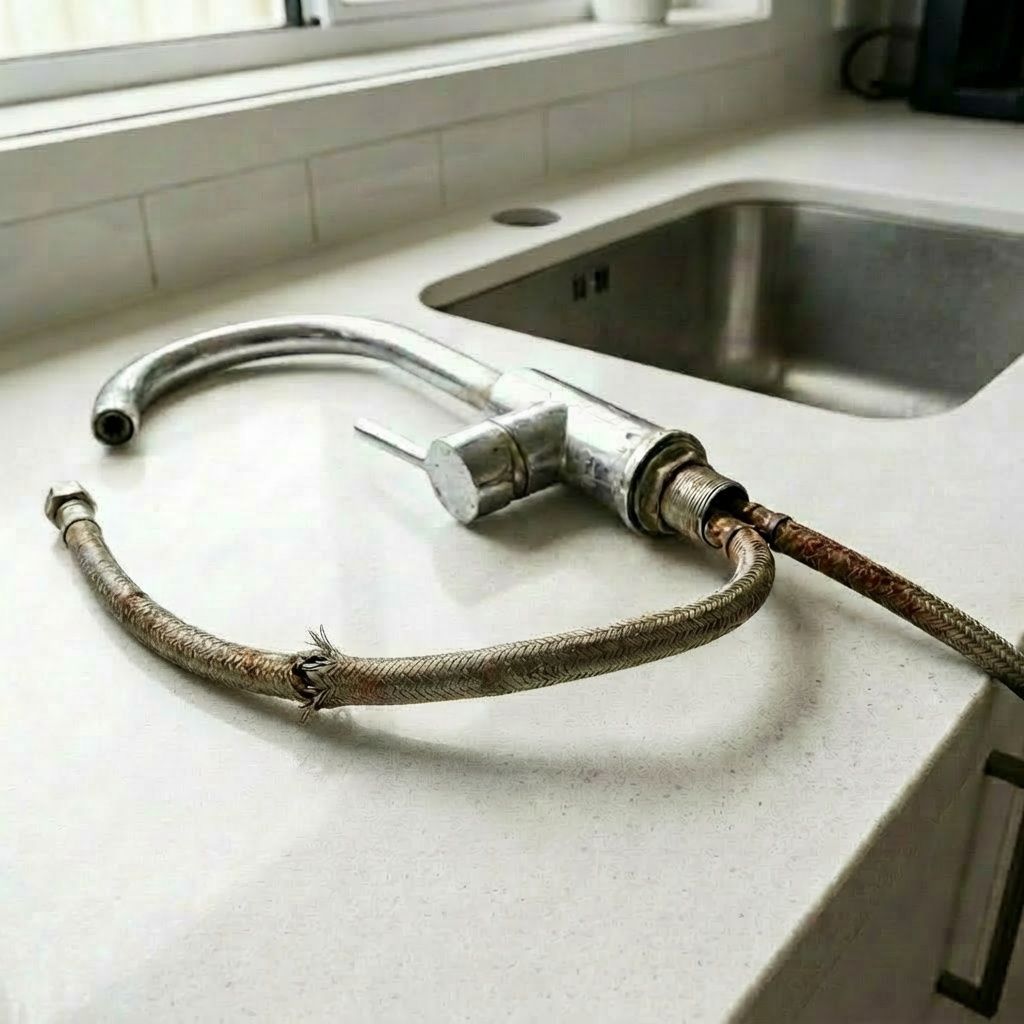
What to look for
You can do a visual check yourself, but a professional audit is the only way to properly assess condition, document age, and provide insurance-ready records.
- Rust stains on the braided exterior, especially near the connections
- Bulging or swelling in the hose body, indicating liner failure
- Moisture or dampness around the connection points
- No date stamp on the connector nut, meaning age cannot be confirmed
- Discolouration of the braiding or green/white residue on fittings
Flexi hose replacement FAQ
How do I know how old my flexi hoses are?
Check for a date stamp on the metal nut or connector. Many hoses have the manufacture or installation date printed on them. If there is no date stamp, or if you cannot access the hose to check, book an audit and we will document the age and condition of every connection.
Can I see the damage before a hose bursts?
Sometimes. Look for rust stains on the braiding, bulging or swelling in the hose, discolouration, or moisture around the connections. However, many failures occur without any visible warning because the inner liner deteriorates inside the intact braiding.
What is the difference between old rubber hoses and newer PEX hoses?
Pre-2000 hoses used a rubber inner liner with a typical 10-year warranty, which has long expired on all installations. Newer hoses use a PEX (cross-linked polyethylene) liner with warranties up to 15 years. Both degrade over time and should be replaced before warranty expiry.
My home is only a few years old. Am I still at risk?
Lower risk, but not zero. New hoses can fail due to manufacturing defects, incorrect installation, excessive water pressure, or water quality issues. The key is knowing when they were installed and having that documented. An audit gives you that baseline.
Don't wait for a burst to find out
A $275 audit today documents every flexi hose in your property. Know their age, condition, and when they need replacing.