
Flexi Hoses and Insurance: Where Do You Stand?
What every Australian property owner needs to know about maintenance, insurance coverage, and the real cost of inaction.
The real cost of a burst flexi hose
When a flexi hose bursts, it can cause severe damage. The average claim exceeds $27,500 and repairs can take months. That figure does not account for the stress, disruption, temporary accommodation, or the personal items that cannot be replaced.
Average insurance claim from a single burst flexi hose. Repairs can take months. That figure does not include stress, disruption, or personal items that cannot be replaced.
Water released at full mains pressure. In an 8-hour workday, that is 4,800 litres. Over 24 hours, up to 14,400 litres flowing unchecked through your property.
is not guaranteed
Policies cover sudden and accidental damage but may not cover wear and tear or lack of maintenance. If a hose shows visible deterioration and is not replaced, claims may be reduced or declined.
Where does your property sit?
Understanding your risk level is the first step toward protection. If you do not know when your flexi hoses were installed, you are already in a higher risk category.
High to Extreme
- Install dates unknown
- Hoses over 5 years old
- No maintenance history
- No documentation for insurer
Moderate
- Install dates known
- Approaching or past warranty
- Visible wear or age concerns
- Replacement should be planned
Protected
- Recently installed certified hoses
- Documented warranty periods
- Regular inspections scheduled
- Evidence of proactive maintenance
What the insurance industry says
Flexi hose bursts are one of the most common sources of internal water damage claims in Australia. Insurance companies including Suncorp, Allianz, RACQ, and YOUI have all highlighted the importance of regular maintenance.
Policies typically cover: Sudden escape of water causing damage to your property and contents.
Policies typically do not cover: The failed hose itself, gradual leaks, damage caused by lack of maintenance, or wear and tear that could have been prevented with regular inspection.
Stuart Wills, FlexiPro's founder, spent three years as a building insurance assessor. His firsthand experience showed that insurers welcome evidence of proactive maintenance. Documented replacement history and audit certificates strengthen your position if a claim is ever needed.
What Australian insurers are publishing about flexi hoses
Major insurers have issued public guidance on the risks of ageing flexi hoses. These resources confirm what we see in the field every day.
Flexi hoses a "ticking time bomb", Suncorp study shows
Suncorp's research into flexi hose failures across Australian homes, including claim frequency, average repair costs, and why hoses fail without warning.
Suncorp GroupSuncorp Insurance flexi hose media release
Official Suncorp media release with statistics on flexi hose claims, the most affected property types, and recommended replacement intervals. (PDF)
Allianz AustraliaFlexi hose maintenance guide
Allianz's guide covering how to identify flexi hoses in your home, signs of deterioration, and a recommended maintenance schedule to reduce claim risk.
RACQTips for taps: flexi hose maintenance
RACQ's practical advice for Queensland homeowners on checking flexi hose condition, understanding warranty periods, and when to call a plumber.
YOUI InsuranceHow to avoid this common and costly home disaster
YOUI's overview of flexi hose failures, the damage they cause, and practical steps every homeowner should take to prevent a burst.
Think Insurance SolutionsBursting flexi hoses lead to eye-watering damage bills
Think GI's analysis of the financial impact of flexi hose bursts, with real examples of repair costs and the case for proactive replacement.
PSC Network Insurance PartnersFlexi hoses: the hidden threat to Australian homes
PSC Network's briefing on why flexi hoses are considered a hidden risk, how they fail, and what property owners and managers should be doing to protect themselves.
Insurance and flexi hose FAQ
What is a flexi hose and where are they in my home?
A flexi hose is a short, braided stainless steel connector that links your water supply pipes to taps, basins, toilets, and laundry troughs. They are hidden under sinks, behind appliances, and in some cases inside concealed cavity walls. The inner rubber liner degrades over time and can burst without warning, releasing water at full mains pressure.
How often should I replace flexi hoses?
Pre-2000 rubber hoses had a 10-year warranty which has long expired; upgrade these immediately. Newer PEX hoses have up to a 15-year warranty but should be replaced well before expiry. Professional tagging and dating is recommended for all installations.
What should I do if a flexi hose bursts?
Turn off the water supply immediately. Contact your insurance company for damage claims. Call a plumber if you are unable to shut off the water. Retain the burst hose for the claims process.
Can I replace flexi hoses myself?
No. You should always use a licensed plumber. DIY plumbing risks failure, water damage, and complications with insurance claims. In Queensland, plumbing work must be carried out by a licensed professional.
What about strata and apartments?
Lot owners are typically responsible for hoses serving their lot. One burst can flood multiple units within minutes. Proactive replacement with proper documentation protects both you and your neighbours, and strengthens your position with insurers. Please check with your body corporate to be sure of the exact wording and any potential liability.
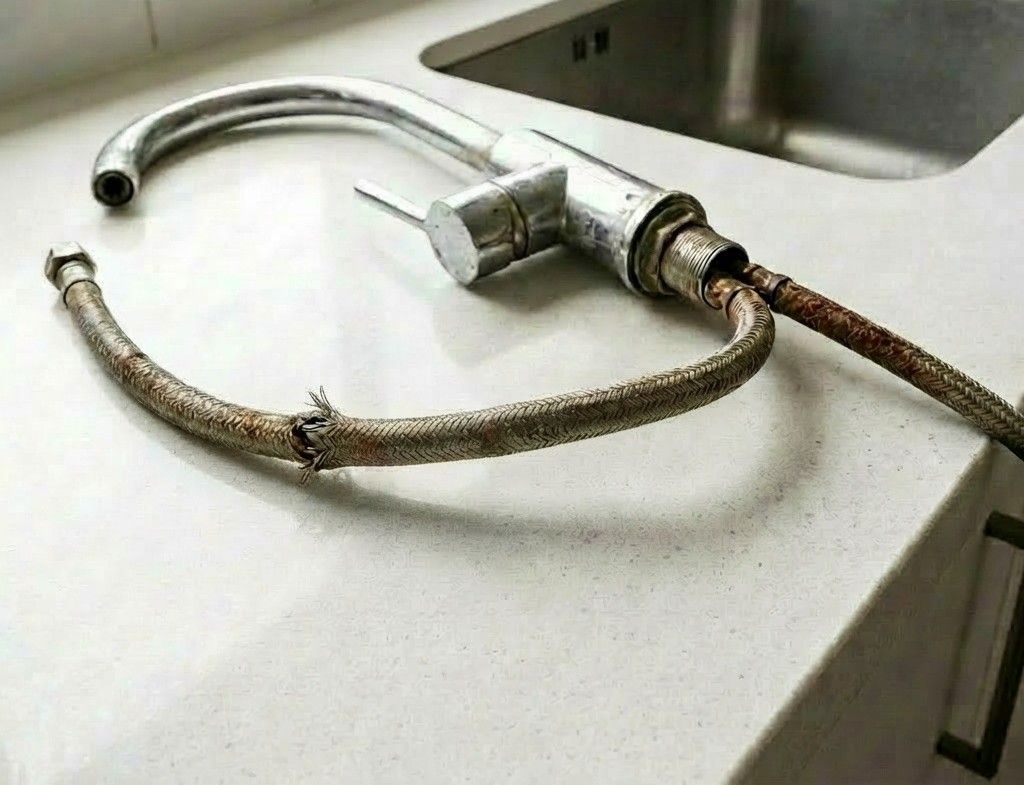
This is what a failed flexi hose looks like
The braided exterior may look intact, but inside, the liner has already deteriorated. By the time you see external signs of wear, the hose is well past its safe operating life.
A professional audit identifies these issues before they become a claim. The cost of prevention is a fraction of the cost of repair.
Do not wait for a claim to find out
A $275 audit today could save you from a $27,500+ claim tomorrow. Know your risk. Protect your property.